2 May 2026
Agar vs. Liquid Culture: What’s the Difference?
Agar vs. Liquid Culture: What’s the Difference?
Understand the difference between agar and liquid culture in mycology. Learn when to use each for microscopy, isolation, and research with SporeSyringes.co.uk.
Both agar plates and liquid culture jars are essential tools in mycology. But knowing when to use one over the other makes all the difference between clean growth and contamination. At SporeSyringes.co.uk, we provide ready-poured agar plates and sterilised liquid culture jars to help UK researchers work safely and effectively.
What Is Agar Used For?
Agar provides a solid surface where spores germinate into visible mycelium. It’s perfect for:
- Isolating clean cultures
- Studying growth under the microscope
- Transferring samples between dishes
Our MEA agar plates are sealed and ready for immediate use — ideal for microscopy and comparison work.
What Is Liquid Culture?
Liquid culture (LC) is a nutrient solution that supports mycelium growth in suspension. It’s faster than agar and easier to transfer to grain bags or syringes. Use sterilised LC jars for expanding established mycelium.
Strengths and weaknesses
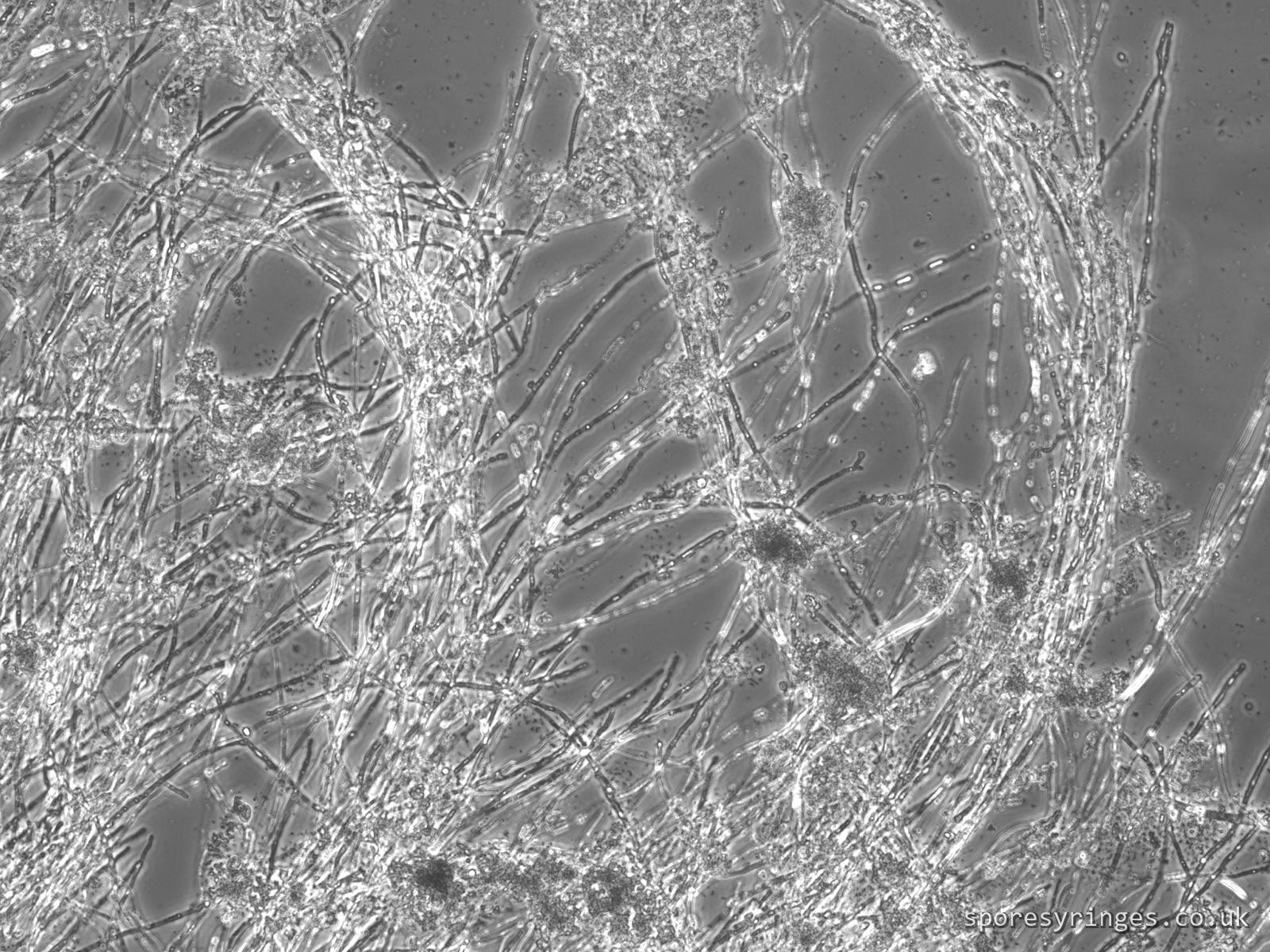
Agar is slower and needs flat fridge space, but a plate shows contamination at once and gives each colony a clear edge to compare and photograph. Liquid culture grows fast and shows branching hyphae well, but contamination is far harder to see in a jar, and it is no use for watching germination.
When to Use Each
Agar plates are best used when starting from spores, allowing researchers to observe germination, isolate clean colonies, and compare colony growth under the microscope. Once a clean culture has been established, it can be expanded efficiently in liquid culture, which provides rapid mycelial growth and easy transfer into sterile grain bags or other media. In short, agar is ideal for microscopy, isolation, and genetic testing, while liquid culture is preferred for scaling up inoculations and maintaining established samples.
Can I put spores straight into liquid culture?
For the gourmet species you are allowed to grow, you can, but it is the wrong order: in a jar you cannot tell a clean colony from a contaminated one. Start on agar, pick the cleanest colony and move that into liquid culture. Liquid culture is for expanding an established culture, not for germination. Psilocybe cubensis spores are for the slide, not the plate or the jar.
Pro Tip
Many researchers start spores on agar, then move the cleanest colony into liquid culture. This ensures purity and speed. Read about Spore source strain Here
Action Plan
Get started with both:
→ Buy Ready-Made Agar Plates (MEA)
→ Agar Making Kit: premixed MEA agar, 20 dishes, still air box and tools
→ Agar recipe calculator: five media scaled to your plates
→ Sterilised Liquid Culture Jars with Air Space
More Reading: