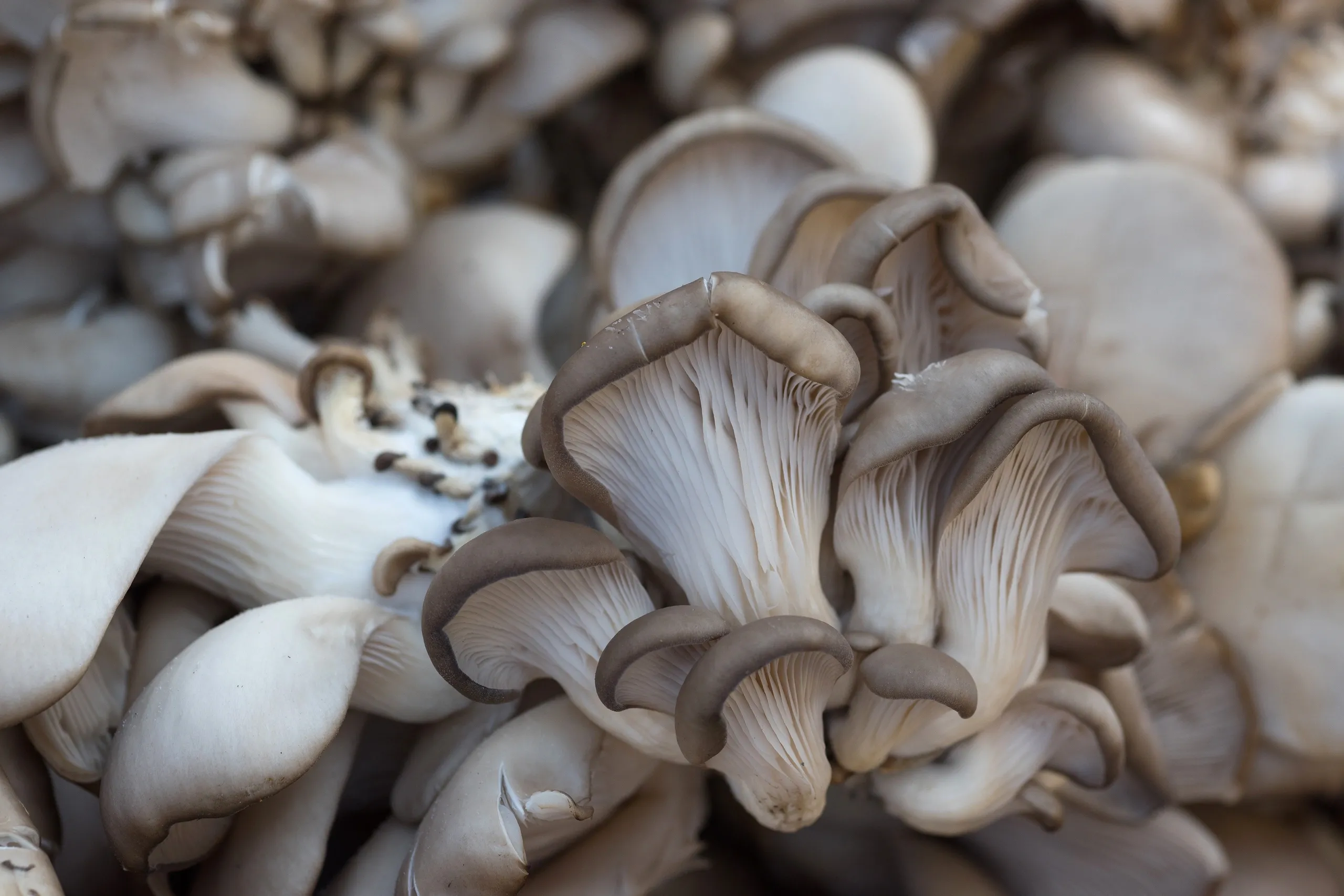
Blue Oyster Mushroom Liquid Culture Syringe, 10ml or 20ml
Coming soon
Not here yet
This one is coming soon. The page stays so you can find it when it arrives.
Free delivery from £35, then up to 20% off.
- £35Free delivery
- £555% off
- £79.9910% off
- £15015% off
- £30020% off
How to colonise a grain bag with this culture
- 1Wipe the port with the alcohol swab
- 2Needle through the port once; inject it all in one place
- 3Tilt the bag so the liquid runs across the base; no mixing
- 4Days 1 to 10: growth shows at the bottom; leave it alone
- 5Day 10: break it up and mix well, through the plastic
- 6Day 15: mix well again; five days between mixes
- 7Day 20: every grain covered; ready for bulk substrate or a casing layer
Instructions
Injection rules for spawn bags →
Download the instructions (PDF)
Read the injection rules and incubation rules first.
Every culture here colonises a grain spawn bag as drawn, or goes straight into an Inject-and-Forget bag: allow 2 to 4 weeks to colonise and 2 to 6 weeks to fruit, depending on temperature. Agar is covered in the description below.
About Blue Oyster Mushroom Liquid Culture Syringe, 10ml or 20ml
A liquid culture of blue oyster mycelium in a 10 ml or 20 ml syringe, for starting grain spawn, agar plates or a further liquid culture. Blue oyster is forgiving and fast growing, which makes it a good first species for a beginner, and it suits outdoor growing because of its high fresh air demand.
About the mushroom
Blue oyster is very forgiving and easy to grow, so it is an ideal first mushroom. The fruits grow rapidly, sometimes doubling in size every day, in large clusters with the shelf-like shape typical of Pleurotus species; size and shape vary widely with growing conditions. Clusters start out a deep, striking blue and turn grey as they mature, and the fruit is usually thick and meaty and versatile in the kitchen. Blue oyster needs an extremely high level of fresh air exchange, more than any other commonly cultivated mushroom, which makes it an ideal candidate for outdoor growing. Grown in a high CO2 environment it produces long, thick stems with small caps. It also has a very heavy spore load, which can quickly fill a grow room with spores.
On agar and in spawn
Blue oyster grows vigorously on agar and seems to prefer malt yeast agar. Growth can be rhizomorphic and eventually becomes thick and fluffy. The mycelium tends to emit a brown or orange metabolite that is often mistaken for contamination, though it may be a sign of the mycelium fighting off contamination. Rye grain works best for spawn, but sawdust spawn can also be used, and some growers report higher yields on straw when sawdust spawn is used in place of grain spawn. Oyster spawn has a distinctive mushroomy scent and breaks up easily in spawn bags for spawning to bulk substrates. Blue oyster spawn tends to sweat, producing pockets of water in spawn bags or grain jars, so position the spawn so that the grain is not sitting in water while it colonises.
Substrates and fruiting containers
Pasteurised straw logs are extremely effective for blue oyster. Use a higher spawn rate for better yields; a straw log will produce multiple flushes if contamination is kept at bay. Supplemented sawdust blocks also work well, but straw is likely to give similar results more economically. Blue oyster will devour almost anything and can be grown on coffee grounds, waste paper, sugar cane, grass and many other waste products.
- Straw logs: poly tubing, 16 inch lay-flat diameter; too thick a log turns anaerobic in the centre and eventually contaminates
- Grow bags: cut slits in the side for mushrooms to grow through, or cut the top off the bag and let fruits form on top of the block
- Buckets and other containers: 5 gallon buckets with holes drilled, or almost any container you can think of
Harvest and storage
Harvest by picking or cutting off entire clusters. Mushrooms keep longer if handled gently and stored as a cluster rather than picked apart, and blue oysters keep longer in the fridge than pink or yellow oysters. They tend to carry on growing in the fridge, with mycelium starting to grow from the stems, which is usually unwanted. For long-term storage, dry them in a dehydrator.
Key features
- Forgiving and fast growing, a good first species
- Fruits can double in size every day
- Deep blue clusters that turn grey as they mature
- Highest fresh air requirement of any commonly cultivated mushroom
- Grows on straw, sawdust, coffee grounds and other waste
- Available in 10 ml and 20 ml syringes
Technical specifications
- Species
- Blue oyster (Pleurotus ostreatus var. columbinus)
- Volume
- 10 ml or 20 ml syringe
- Use
- Grain spawn, agar plates and further liquid culture
- Preferred agar
- Malt yeast agar
- Spawn
- Rye grain works best; sawdust spawn can also be used
- Substrates
- Pasteurised straw, supplemented sawdust, coffee grounds and other waste
- Storage
- In the fridge at 2 to 8 °C, where it keeps for 3 to 6 months; shake before drawing from it
Buying more than one item?
Delivery is free from £35, and the discount rises with the basket — 5% from £55, up to 20% from £300. Applied automatically at checkout.
Compare with related products
- Antler Reishi Mushroom Liquid Culture Syringe, 10ml or 20ml
- Black Poplar Mushroom Liquid Culture Syringe, 10ml or 20ml
- Cordyceps Mushroom Liquid Culture Syringe, 10ml or 20ml
- Lion's Mane Mushroom Liquid Culture Syringe, 10ml or 20ml
- Turkey Tail Mushroom Liquid Culture Syringe, 10ml or 20ml
- Chestnut Mushroom Liquid Culture Syringe, 10ml or 20ml
- Chicken of the Woods Mushroom Liquid Culture Syringe 20ml
- Golden Oyster Mushroom Liquid Culture Syringe, 10ml or 20ml
Blue Oyster Mushroom Liquid Culture Syringe, 10ml or 20ml FAQs
Is the brown or orange liquid on my culture contamination?
Not necessarily. Blue oyster mycelium tends to emit a brown or orange metabolite that is often mistaken for contamination, and it can be a sign of the mycelium fighting off a contaminant.
Why do my blue oysters have long stems and small caps?
That is what blue oyster does in a high CO2 environment. It needs an extremely high level of fresh air exchange, more than any other commonly cultivated mushroom.
Can I grow blue oyster outdoors?
Yes. Its fresh air requirement is higher than that of any other commonly cultivated mushroom, which makes it an ideal candidate for outdoor growing.
Customer reviews
No reviews yet. Reviews are written by customers from the link in their dispatch email, so every one comes from a confirmed order.