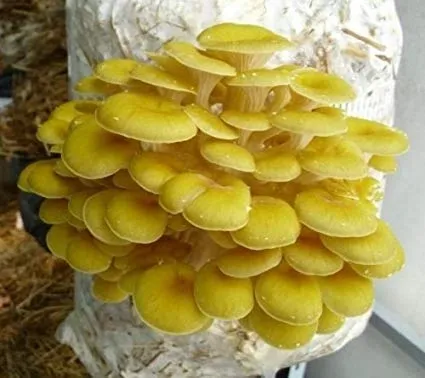
Golden Oyster Mushroom Liquid Culture Syringe, 10ml or 20ml
Coming soon
Not here yet
This one is coming soon. The page stays so you can find it when it arrives.
Free delivery from £35, then up to 20% off.
- £35Free delivery
- £555% off
- £79.9910% off
- £15015% off
- £30020% off
How to colonise a grain bag with this culture
- 1Wipe the port with the alcohol swab
- 2Needle through the port once; inject it all in one place
- 3Tilt the bag so the liquid runs across the base; no mixing
- 4Days 1 to 10: growth shows at the bottom; leave it alone
- 5Day 10: break it up and mix well, through the plastic
- 6Day 15: mix well again; five days between mixes
- 7Day 20: every grain covered; ready for bulk substrate or a casing layer
Instructions
Injection rules for spawn bags →
Download the instructions (PDF)
Read the injection rules and incubation rules first.
Every culture here colonises a grain spawn bag as drawn, or goes straight into an Inject-and-Forget bag: allow 2 to 4 weeks to colonise and 2 to 6 weeks to fruit, depending on temperature. Agar is covered in the description below.
About Golden Oyster Mushroom Liquid Culture Syringe, 10ml or 20ml
A liquid culture of golden oyster mycelium in a 10 ml or 20 ml syringe, for starting grain spawn, agar plates or a further liquid culture. Golden oyster is fast and easy to grow and fruits in bright yellow bouquets, a popular choice for home cultivators and market growers who want a mushroom that stands out.
About the mushroom
Golden oyster is both striking and easy to grow, which makes it popular with home cultivators. It grows fast and fruits heavily in vibrant, bright yellow bouquets, though the small, relatively thin fruit bodies usually give a smaller overall yield. Like pink oyster it is a warm weather strain that tolerates higher fruiting temperatures. It usually forms multiple clusters with a high number of fruits, each notably smaller than other oyster mushrooms. The thin, delicate caps need gentle harvesting and careful storage, and the short shelf life means it does not cope well with much handling or transport. Those delicate features make it difficult to produce on a commercial scale, which is why you rarely see golden oysters in a supermarket. Their looks make them a favourite with farmers' market growers.
On agar and in spawn
Golden oyster mycelium grows well on malt yeast agar. It is eager to fruit, and small pins often form on the dish; left long enough, it will fruit through the sides of the agar dish. The mycelium can be extremely dense in places and quite thin in others. Grain spawn works best: rye grain, sorghum, millet or a combination of them are all good candidates. Growth through the spawn is slow at first but speeds up as the culture colonises it.
Substrates and fruiting containers
Golden oyster grows on either straw or supplemented sawdust, and both work well. Supplemented sawdust blocks may give thicker, less delicate fruits, but overall yield is similar.
- Straw logs: poly tubing; the mushroom fruits through the holes in the tubing
- Supplemented sawdust blocks: filter patch grow bags; cut holes wherever the first pins form rather than cutting the top off the bag, which gives poorer results
- Bottle cultures: also commonly used, with a large single cluster forming through the top of the bottle
Harvest and storage
Aim to harvest most of the mushrooms in the first flush. Rather than picking off individual mushrooms, remove entire clusters or bouquets at the base with a sharp knife to keep handling to a minimum. Store in a cool place such as a cold room or refrigerator. Golden oysters have a short shelf life and should be sold or used within a couple of days of harvest.
Key features
- Fast and easy to grow, fruiting in bright yellow bouquets
- Warm weather strain that tolerates higher fruiting temperatures
- Grows on straw or supplemented sawdust
- Grain spawn on rye, sorghum or millet
- Rarely seen in shops because of its short shelf life
- 10 ml syringe
Technical specifications
- Species
- Golden oyster (Pleurotus citrinopileatus)
- Volume
- 10 ml or 20 ml
- Use
- Grain spawn, agar plates and further liquid culture
- Preferred agar
- Malt yeast agar
- Spawn
- Rye grain, sorghum, millet or a combination
- Substrates
- Straw or supplemented sawdust
- Shelf life of fruit
- Short; sell or use within a couple of days of harvest
- Storage
- In the fridge at 2 to 8 °C, where it keeps for 3 to 6 months; shake before drawing from it
Buying more than one item?
Delivery is free from £35, and the discount rises with the basket — 5% from £55, up to 20% from £300. Applied automatically at checkout.
Compare with related products
- Antler Reishi Mushroom Liquid Culture Syringe, 10ml or 20ml
- Black Poplar Mushroom Liquid Culture Syringe, 10ml or 20ml
- Cordyceps Mushroom Liquid Culture Syringe, 10ml or 20ml
- Lion's Mane Mushroom Liquid Culture Syringe, 10ml or 20ml
- Turkey Tail Mushroom Liquid Culture Syringe, 10ml or 20ml
- Blue Oyster Mushroom Liquid Culture Syringe, 10ml or 20ml
- Chestnut Mushroom Liquid Culture Syringe, 10ml or 20ml
- Chicken of the Woods Mushroom Liquid Culture Syringe 20ml
Golden Oyster Mushroom Liquid Culture Syringe, 10ml or 20ml FAQs
How should I harvest golden oysters?
Remove entire clusters or bouquets at the base with a sharp knife rather than picking off individual mushrooms, so the delicate caps are handled as little as possible. Aim to take most of the crop in the first flush.
Why is the yield lower than other oyster mushrooms?
Golden oyster produces a high number of fruits, but each is notably smaller and thinner than other oysters, so the overall yield is usually smaller. Supplemented sawdust blocks may give thicker fruits, though total yield is similar to straw.
Can I cut the top off the grow bag?
On a sawdust block of your own, no: cut small openings where the first pins form and harvest through them. An Inject-and-Forget bag is different and is opened at the top only at harvest, as its instructions say.
Customer reviews
No reviews yet. Reviews are written by customers from the link in their dispatch email, so every one comes from a confirmed order.